Ελληνικά
Promotion of the Diatichesma at the archaeological site of the Western Hills of the Acropolis. Upgrading the ticket office at the entrance to the Acropolis
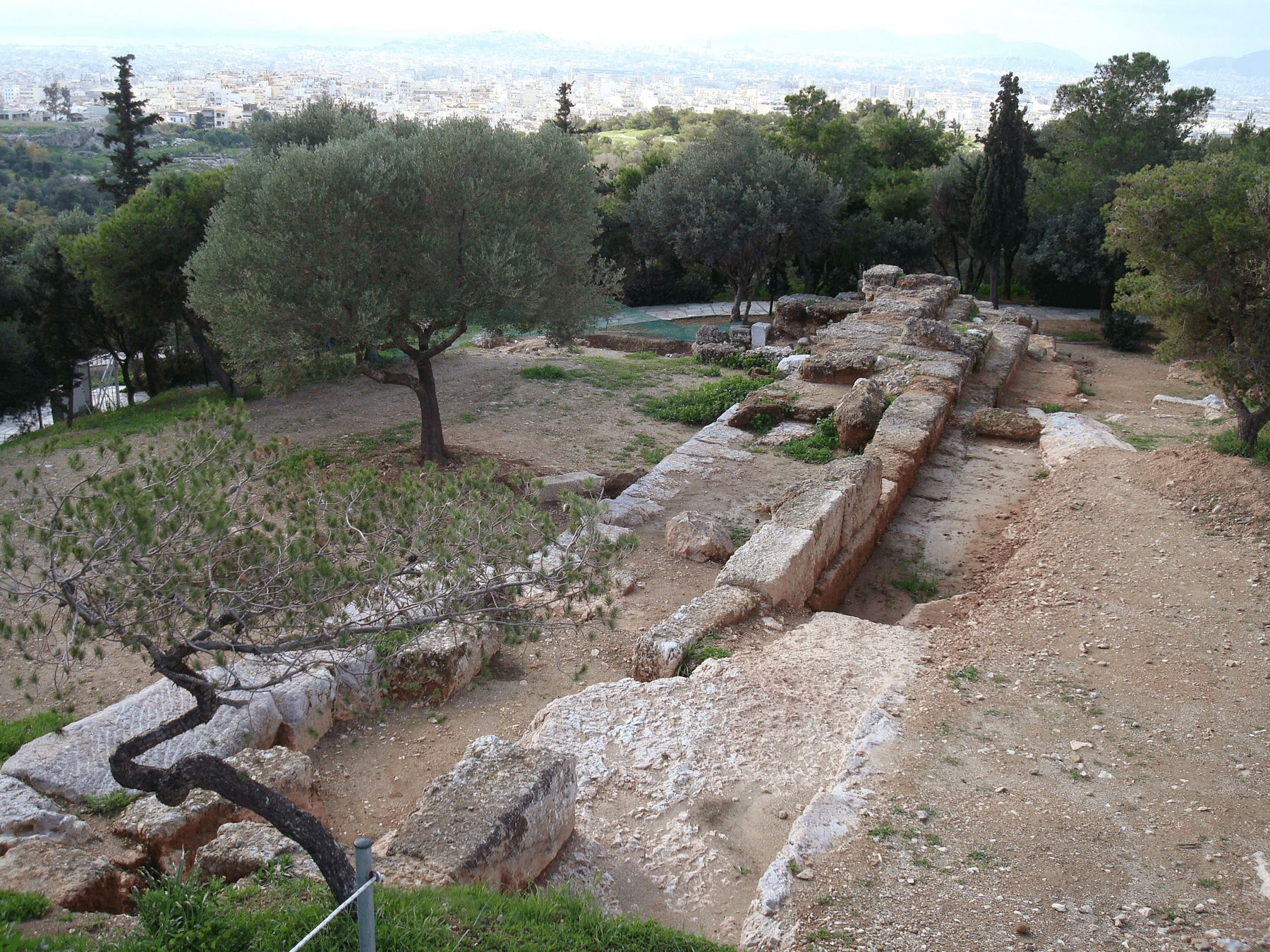
General view of the Diatichesma on the Pnyx Hill
The Ministry of Culture -through the competent Ephorate of Antiquities of the City of Athens- is proceeding with the promotion of the Diatichesma, at the archaeological site of the Western Hills (Muses, Pnyx and Nymphs) of the Acropolis and with works to configure the ticket office at the central entrance of the archaeological site of the Acropolis and Slopes in order to support the necessary equipment for the ODAP project, for the implementation of digital interactive services and content. The projects are part of the broader context of the upgrade of the services provided to visitors to the archaeological site, with the installation of new equipment.
Minister of Culture Lina Mendoni stated: “Following the inauguration of the new shop at the archaeological site of the Acropolis, the upgrading of the Areopagus plateau, and the opening to the public of a new tour route along the Northern Slope, as well as the ongoing restoration works at the Old Museum and the Mycenaean wall, on the eastern plateau, we are continuing at a systematic pace the works of promotion and upgrading of the wider archaeological site of the Acropolis. The Ephorate of Antiquities of the City of Athens is implementing a comprehensive intervention to protect and promote the sections of the Wall on the Western Hills of the Acropolis, which constitutes one of the most representative examples of the fortification activity of ancient Athens, covering approximately fifteen centuries of history. At the same time, with funding from the ODAP, the Ephorate of Antiquities is proceeding with digital upgrading work at the ticket office at the central gate of the Acropolis, in order to provide visitors with modern and quality services. The planned interventions aim to address structural problems and prevent further damage, so as to highlight and interpret the monument with the least possible intervention in the archaeological landscape.
Renovation works at the Acropolis ticket office
The proposed renovation works at the ticket office at the central entrance to the archaeological site of the Acropolis provide, among other things, the installation of five automatic payment stations, of which three for the central ticket office and two for the ticket office on the South Slope. It is also proposed to rearrange the ticket office with four service positions (one for disabled people) for visitors. The construction of a new metal-framed bench and the installation of a metal sunshade, internal arrangements, extension of the raised floor and construction of a disabled ramp for better access and new electrical installation are planned. According to the current program agreement between the Ministry of Culture and the ODAP regarding the project, the Ephorate of Antiquities of the City of Athens undertakes the implementation of the work of shaping the Paypod installation site and the ODAP will finance the work of shaping the existing ticket office with limited interventions in the surrounding area of the building in the direction of improving the services offered and the working conditions of the ticket office employees.
Highlighting the Wall
The Wall was built to strengthen the fortifications of ancient Athens, connecting the Hill of the Muses (Filopappou) with the Hill of the Nymphs (Asteroskopio), essentially uniting two points on the periphery of the Themistocleian Wall (479 BC) and creating a new western boundary of the city. The Wall extends for 900 m, on the ridge of the hill range. From the 4th century BC until the end of antiquity, it underwent repairs and alterations, constituting a characteristic example of defensive architecture. Its first construction phase is characterized by the intricate technique using conglomerate stone. It was initially dated to the end of the 4th century BC, which refers to repairs of the walls of the city, Piraeus and the Long Walls. The Diatechisma underwent significant interventions in the Middle Hellenistic period (200 – 166 BC), with extensive repairs and additions, using white limestone. The most significant change was the displacement of the wall westward to the Pnyx area, with a new solid construction. Interventions also occurred in the Late Hellenistic period (after the invasion of Sulla, 86 BC), during the 1st and 2nd centuries AD, as well as in the years of Valerian (253–260 AD). After the invasion of the Heruli (267 AD) and the destruction suffered by Dipylon, the Diatechisma was abandoned along with the entire area. However, in the era of Justinian (527 – 565 AD) extensive repairs were made.
In more recent times, during the 1950s and 1980s, various interventions were carried out (pathway modifications, tree planting, “Sound and Light” installations) that altered the landscape and covered parts of the wall. Later, as part of the project to unify the archaeological sites of Athens
https://www.culture.gov.gr/el/Information/SitePages/view.aspx?nID=5556